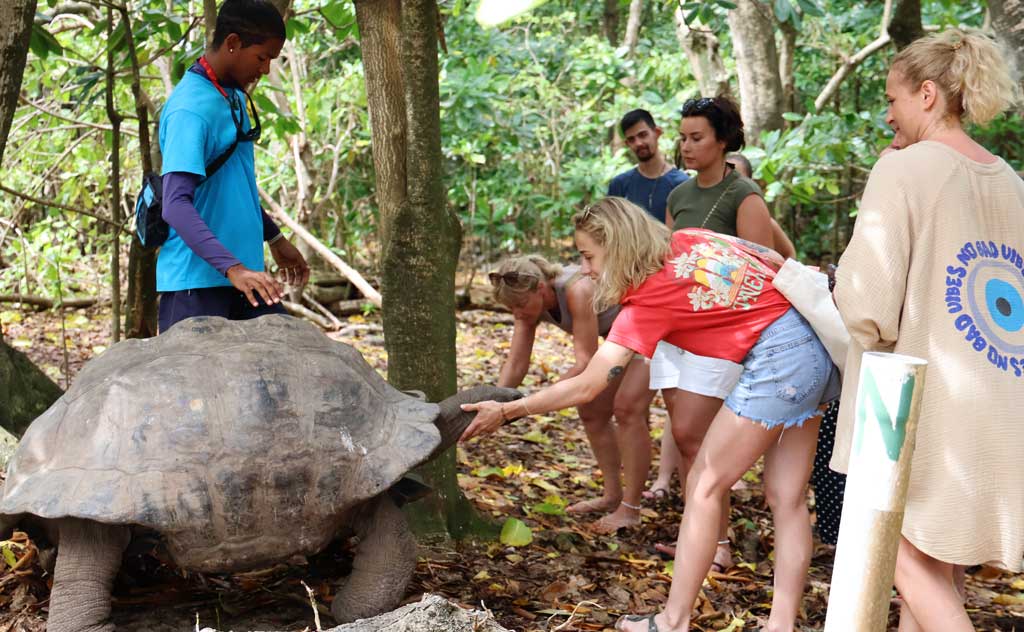
It can be confusing when a visitor asks where they can pet and feed turtles. In due course, you’ll realise they mean tortoises, and you can direct them to the various locations to see Aldabra Giant Tortoises instead of sea turtles in the water. In Seychelles, we distinguish between the Aldabra Giant Tortoise and sea turtles; however, some people refer to tortoises as “turtles.”
As perplexing as it can be, they are not wrong – as it is often said, “all tortoises are turtles, but not all turtles are tortoises.” Both sea turtles and tortoises are reptiles that belong to the order Testudines, which also includes aquatic and semi-aquatic terrapins, also known as pond or mud turtles.
The differences in the usage of the common terms turtle, tortoise, and terrapin seem to be geographical and linguistic, and depend on the variety of English being used and where one is, commentors say. For instance, British English speakers refer to land-dwelling testudines as tortoises, while ocean-dwelling ones are called turtles. In North America, however, the term “turtle” is used more widely and can also include land-dwelling species. In Australia, where native tortoises are not found, freshwater turtles were historically referred to as “tortoises.” However, experts now prefer the term “freshwater turtle” to reduce confusion.
But what are the differences between sea turtles and tortoises?
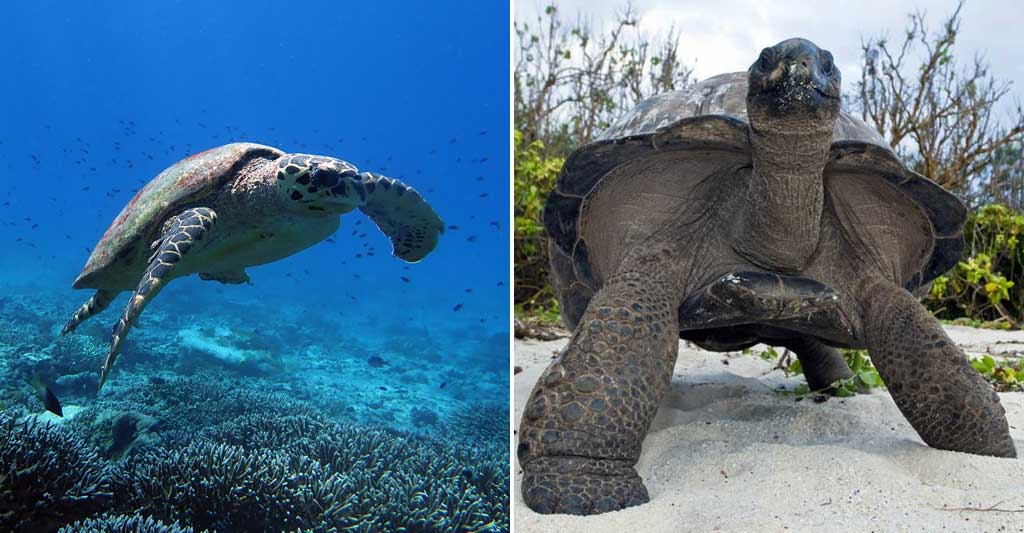
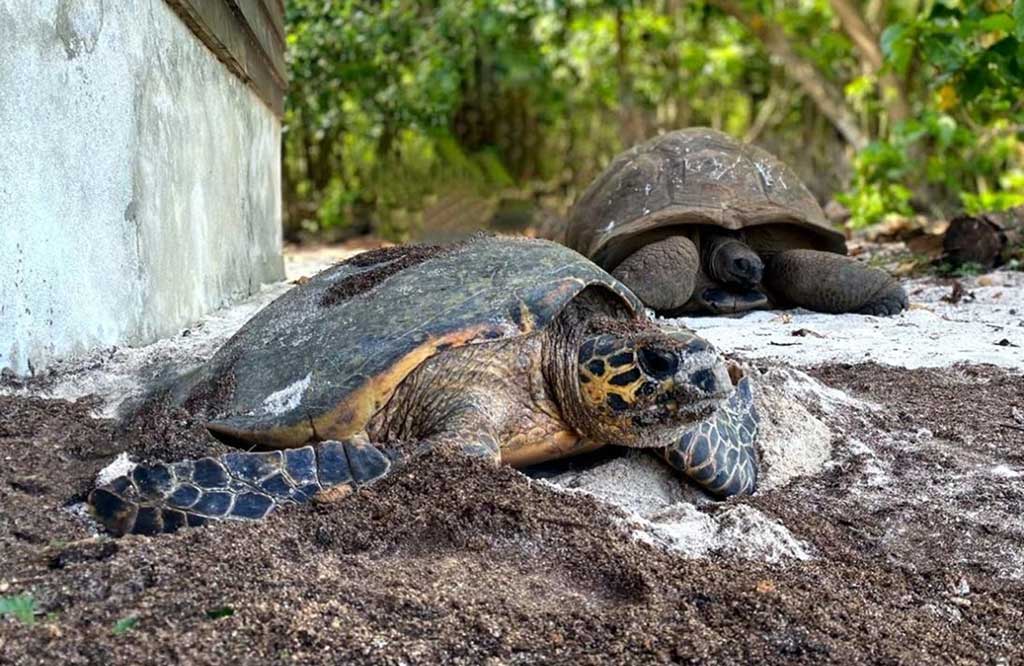
The main difference is where they live. Sea turtles are found in the ocean, while tortoises are land-dwelling. Tortoises can live in a wide range of habitats, while sea turtles spend their lives in the ocean and only come on land to nest.
All testudines have a body encased in a shell. While tortoises have more rounded, domed shells, sea turtles have thinner, streamlined shells that help them navigate the ocean. Tortoises can also easily stick their heads in and out of their shell, but sea turtles can’t retract their heads into their shells.
For limbs, tortoises have sturdy legs that allow them to walk on land. Sea turtles use their flippers to swim in the ocean. They use their flippers to crawl onto land when they come to lay their eggs.
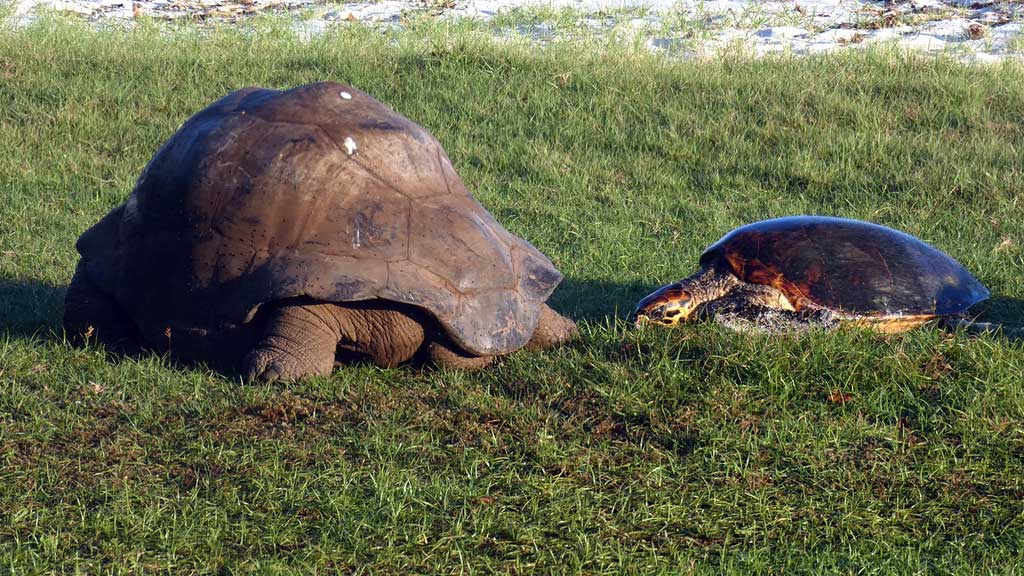
The other difference is the diet. Tortoises are typically herbivores, while sea turtles have diverse dietary habits depending on their species and age. Some species are herbivorous as adults, like the Green sea turtle, whose juveniles are omnivores, while others, like the Hawksbill, which primarily eat sea sponges, but also eat a variety of other plants and animals, are omnivores.
So, suppose you are in Seychelles and you see a landlubber eating leaves or slowly moving its bulky body on land. In that case, you are looking at the Aldabra Giant Tortoise (Aldabrachelys gigantea, Torti-d-ter). When you are in the water, you are most likely to see a Hawksbill (Eretmochelys imbricata, Kare) and Green sea turtle (Chelonia mydas, Torti-d-mer), both of which nest on the islands. Additionally, Loggerhead, Leatherback, and Olive Ridley sea turtles have been observed in Seychelles waters, though they do not typically nest here.
We also have terrapins – the Black Mud Terrapin and the Yellow-bellied Mud Terrapin. These live in fresh and brackish water and can often be found in wetlands.